
By Cassidy Mills, Staff Writer
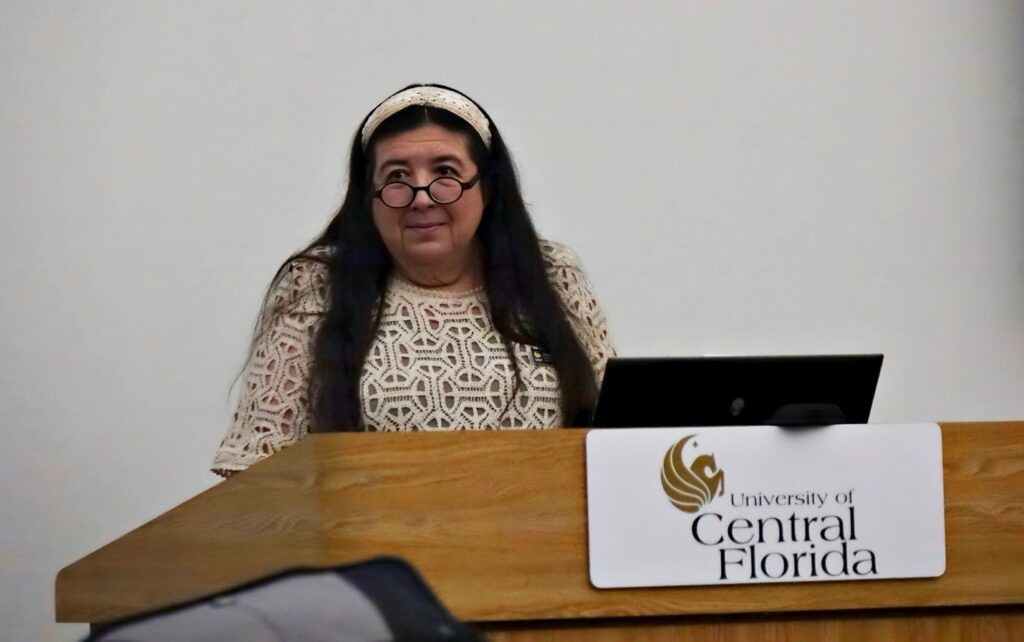
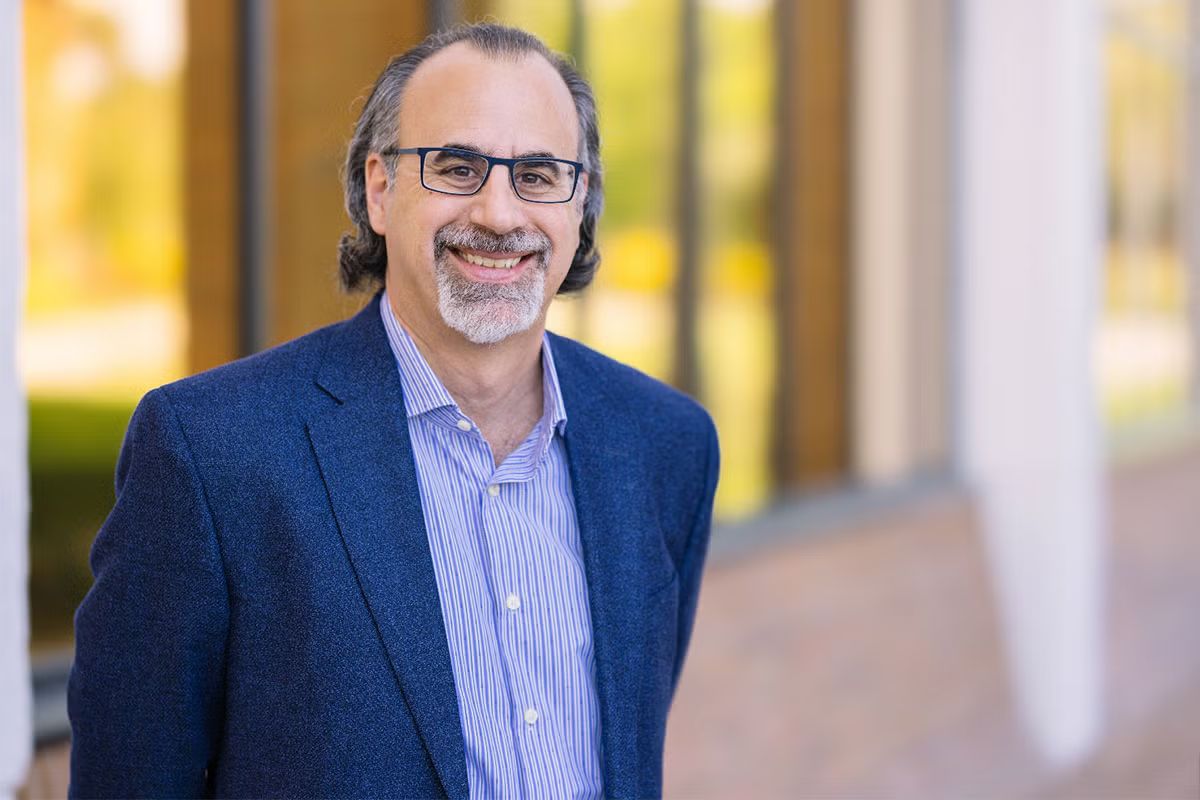
Carolina Cruz-Neira, executive director of the Pegasus Research Institute (PRI) and interim executive director of the University of Central Florida’s Institute for Simulation and Training (IST), opened UCF’s Artificial Intelligence for Disaster Management Advanced Study Institute with a keynote address on Nov. 17.
Titled Artificial Intelligence for Disaster Management: Building Damage Identification and Flood Event Detection Using Deep Learning, the seven-day program served as a high-intensity training initiative that equips practitioners from around the world with the skills to assess natural disasters using deep learning and geospatial imagery.
Hosted at UCF IST from Nov. 17–23, the institute focuses on building damage identification, flood detection and the end-to-end workflows needed to deploy artificial intelligence (AI) solutions in real-world emergency operations.
In her opening remarks, Cruz-Neira welcomed the international audience to UCF and outlined the scope of Florida’s High-Tech Corridor, the region stretching from Tampa and St. Petersburg through Orlando to the Space Coast and supporting a concentration of industry, government organizations and research activity.
“We are very excited to be at UCF, which is one of our anchor institutions in this region,” Cruz-Neira said. “The corridor includes the Kennedy Space Center, cruise terminals, industry and governmental organizations, along with a longstanding presence in modeling and simulation.”
Cruz-Neira highlighted UCF’s transformation into Florida’s premier technology and engineering university, driven by statewide priorities and the institution’s longstanding leadership in modeling, simulation and human-centered design.
AI, blockchain and digital twin innovation are among the university’s rapidly growing research strengths, driving innovation and real-world applications across the fields of disaster management and the Modeling & Simulation (M&S) domain.
“UCF is becoming the technology and engineering university of the state of Florida,” Cruz-Neira said. “We are becoming very strong in AI, in blockchain and in digital twins — areas that are shaping the future of innovation.”
Cruz Neira said IST, which serves as the host for the Advanced Study Institute, has been a cornerstone of simulation and training research for more than four decades. Its labs, high-performance computing environments and deep partnerships with defense, industry and government agencies offer a unique training ground for applying AI to real-world challenges.
“For me, it is personally meaningful to lead an institute I once looked up to as a graduate student,” Cruz-Neira shared. “IST was built to support the emerging ecosystem around space and defense, and today it continues that tradition through cutting-edge research and collaboration.”
She encouraged participants to view AI not only as a technical tool, but as part of a larger ecosystem of data, M&S and multi-stakeholder coordination that underpins modern disaster response.
The increasing complexity of global emergencies, Cruz-Neira said, requires integrated systems capable of synthesizing fast-changing information and supporting decisions made under extreme time pressure.
“As you go through the week, think about how AI fits into a larger framework of emergency management,” Cruz-Neira said. “We need to bring data, simulations and stakeholders together so we can respond with greater speed, clarity and collaboration.”
As participants spent the week training models, analyzing imagery and exploring AI-enabled decision tools, they did so within the broader context Cruz-Neira described — one in which innovation, preparedness and collaboration proved essential to building more resilient communities worldwide.
Recent Articles

Be Informed
Stay Connected
By signing up, you consent to receive emails from us. Your information will be kept confidential and will not be shared with third parties.