
By Cassidy Mills, Staff Writer
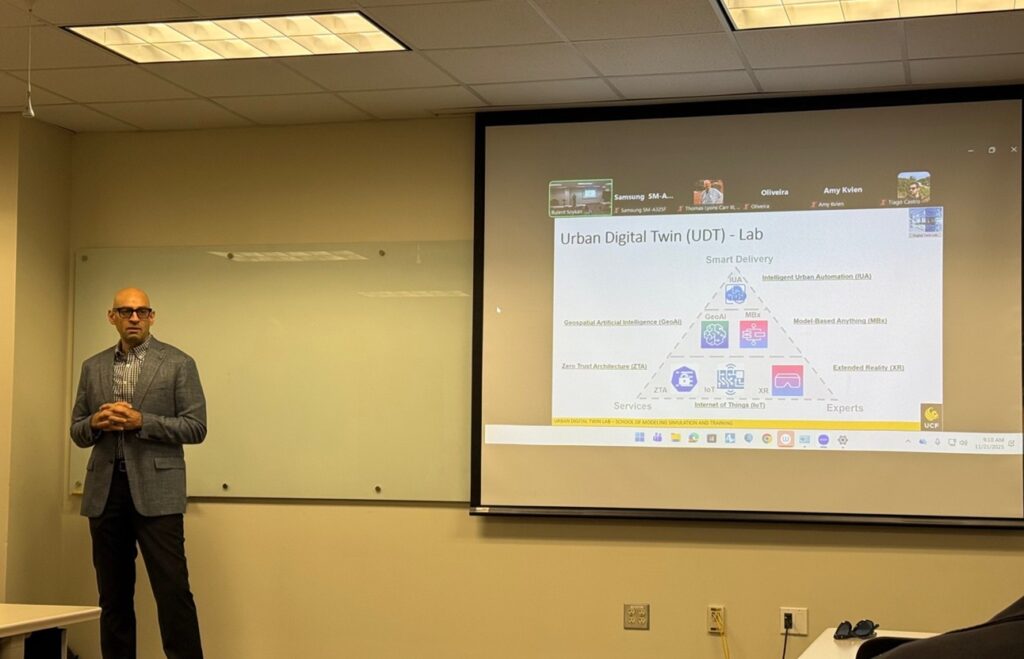
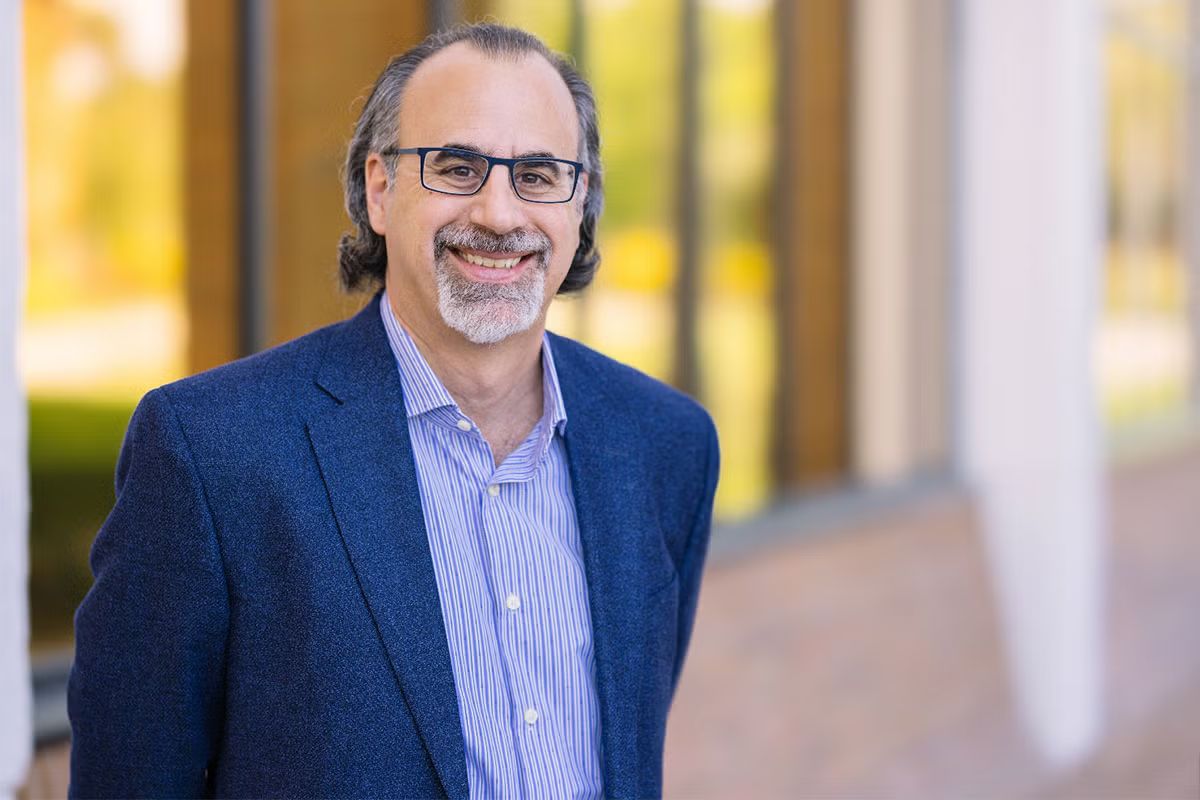
Soheil Sabri, Ph.D., assistant professor and director of the Urban Digital Twin Lab at the University of Central Florida’s Institute for Simulation and Training (IST), gave two lectures at UCF’s Artificial Intelligence for Disaster Management Advanced Study Institute (ASI) on Nov. 20.
Titled Artificial Intelligence for Disaster Management: Building Damage Identification and Flood Event Detection Using Deep Learning, the seven-day program served as a high-intensity training initiative that equips practitioners from around the world with the skills to assess natural disasters using deep learning and geospatial imagery.
Hosted at UCF IST from Nov. 17-23, the institute focuses on building damage identification, flood detection and the end-to-end workflows needed to deploy AI solutions in real-world emergency operations.
Sabri’s lectures provided the technical foundation for developing faster, more accurate disaster assessment systems, reinforcing the ASI’s goal of improving global preparedness and resilience.
His Session 7 lecture, Machine Learning Workflows for Disaster Management Solutions, provided an overview of how to design and implement machine learning workflows for disaster management, covering the data pipeline, data quality and real time model deployment.
Sabri opened Session 7 by highlighting digital twins and geospatial artificial intelligence (AI) as essential tools for disaster management. He described digital twins as integrated, data-driven models of real-world entities and processes that enable real-time simulation, monitoring and analysis.
“Digital twin is one of the concepts and tools for automating the workflow for disaster assessment,” Sabri said. “It allows us to connect physical systems, virtual simulations and human expertise in real time.”
He explained how these systems combine physical, virtual and human components, using AI to interpret sensor data, Internet of Things (IoT) streams and geospatial information to generate actionable insights.
Sabri demonstrated how digital twins can unify building, environmental and social data, with applications ranging from urban infrastructure to theme parks such as Disney World and Universal Studios.
“In urban settings or theme parks, when a sensor reading is off, teams can respond immediately,” Sabri said. “Automation pipelines allow us to detect anomalies and take action quickly, improving safety and efficiency.”
The lecture also addressed interoperability challenges, emphasizing the need for coordinated standards, protocols and frameworks to combine diverse data sources — such as imagery, location data and sensor readings — for accurate modeling.
Sabri stressed the importance of automation pipelines that support predictive maintenance and deliver timely information to decision-makers while ensuring trust, security and the ethical use of data.
“We need to use standards, protocols and enabling technologies to integrate diverse data formats,” Sabri said. “From satellite imagery to sensor networks, ensuring these systems communicate is essential for accurate modeling and rapid disaster response.”
The Session 8 lecture, Introduction to Automated Building Damage and Flood Event Detection, explored techniques for identifying building damage and flood events using satellite imagery and deep learning, with a focus on segmentation models and the challenges of applying these methods in real-world disaster scenarios.
Sabri described a process that uses data from low-cost cameras, drones and mobile devices together with geospatial models to quickly and automatically assess disaster impacts.
“We synchronize disparate data, such as camera imagery and geospatial models, so that even if some data points are missing, the system can still generate accurate insights,” Sabri said.
He explained how segmentation and machine learning classify and crop images, reducing confusion and supporting analysis in real time, whether on the edge or on centralized platforms.
“In addition to images, we integrate real-time traffic, crowd-sourced data and other sensor information,” Sabri said. “This multi-modal approach allows us to make more informed decisions quickly, even in complex urban environments.”
Sabri also addressed challenges with image location, georeferencing and geocoding, noting that large language models and open-source data help estimate coordinates when metadata is missing.
He explained how these methods help urban designers and autonomous systems understand pedestrian and environmental risks and adapt infrastructure or operations accordingly.
“This system isn’t just for disaster management,” Sabri said. “It can be applied to autonomous vehicles, pedestrian safety and urban planning — helping decision-makers understand risk and optimize environments using AI-driven geospatial data.”
Through the lectures, Sabri highlighted the critical role of adaptable, technology-driven systems in preparing for complex emergencies. The discussions reinforced the importance of equipping global practitioners with the skills to harness AI tools for smarter, data-informed decision-making.
Recent Articles

Be Informed
Stay Connected
By signing up, you consent to receive emails from us. Your information will be kept confidential and will not be shared with third parties.